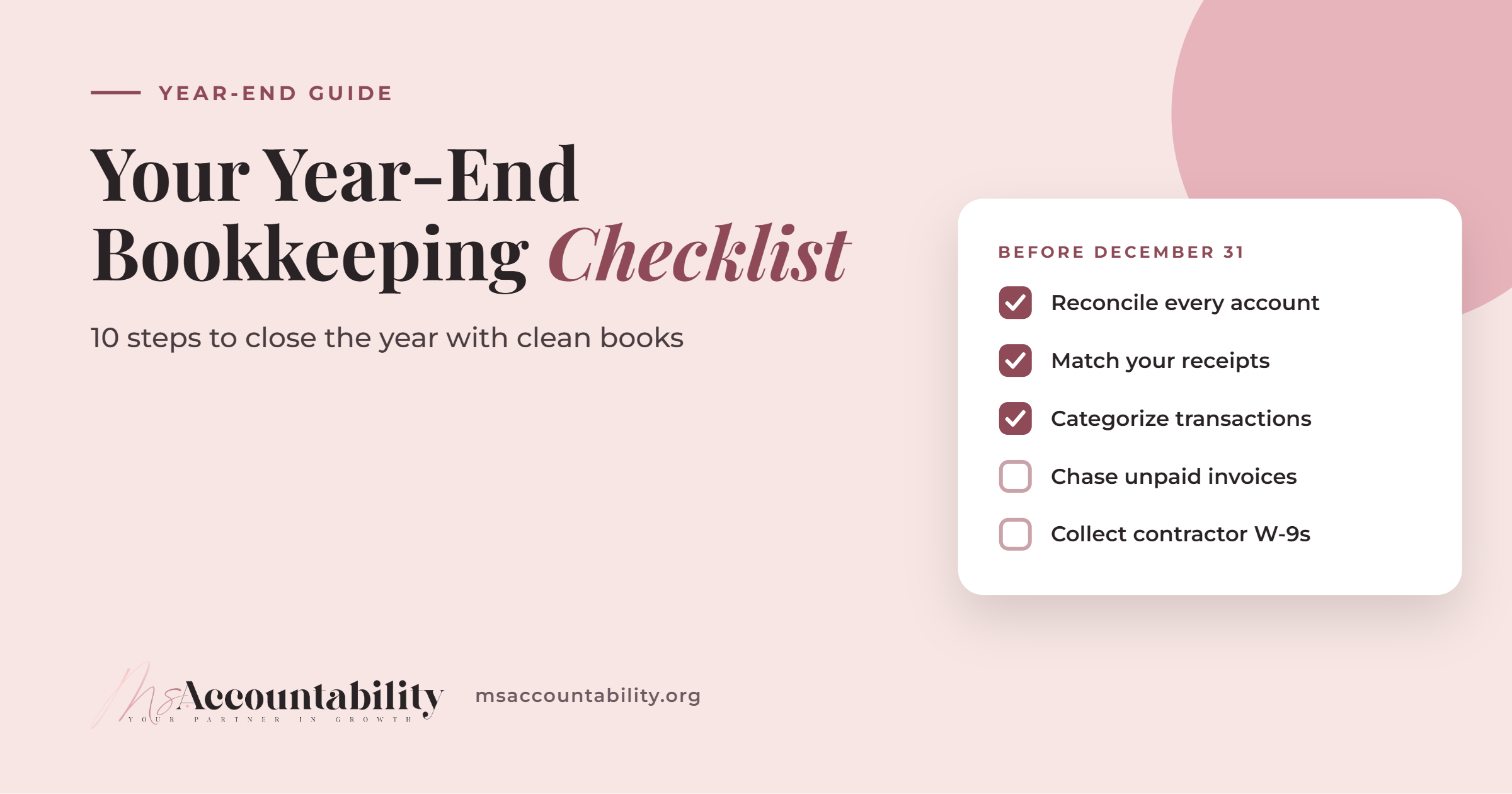
The end of the year sneaks up fast, especially for small business owners juggling holiday sales, staff schedules and family plans. But the weeks before December 31 are the best time to get your books in order. A little work now means a smoother tax season, fewer surprises and a clear picture of how your business really did this year.
Use this year-end bookkeeping checklist to close out the year with confidence.
1. Reconcile every bank and credit card account
Start by matching your bookkeeping records to your bank and credit card statements, month by month. Every transaction in your bank should appear in your books, and every transaction in your books should appear in your bank. Look for duplicates, missing deposits and old uncleared checks.
If you're months behind, don't panic. That's exactly what catch-up bookkeeping is for.
2. Gather and match your receipts
The IRS expects you to back up your business expenses. Go through your purchases and make sure you have a receipt or invoice for each one, especially larger purchases, meals, travel and equipment. Snap photos of paper receipts and attach them in QuickBooks Online or Xero so they're stored with the transaction.
3. Review your income and categorize every transaction
Uncategorized transactions are one of the most common problems we see. Go through your "Ask My Accountant" or uncategorized account and assign every item to the right category. Correct categories are what turn your books into useful reports and make sure you claim every deduction you're entitled to.
For a refresher on the deductions small business owners often overlook, read our post on top tax deductions every small business owner should be taking.
4. Follow up on unpaid invoices
Run an accounts receivable aging report and see who still owes you money. Send friendly reminders now, before the holidays slow everyone down. For invoices you truly can't collect, talk to your bookkeeper about whether to write them off before year-end.
5. Check your payroll records
Confirm employee names, addresses and Social Security numbers are correct so W-2s go out without errors. Review year-to-date wages, bonuses and benefits, and make sure all payroll tax deposits were made on time. Planning holiday bonuses? Run them through payroll so they're taxed correctly.
6. Collect W-9s from your contractors
If you paid independent contractors this year, you'll likely need to send them a 1099-NEC in January. Make sure you have a current W-9 on file for every contractor you paid so you aren't scrambling for addresses and tax ID numbers in January.
7. Count your inventory
If you sell products, whether online or from a salon shelf, do a physical inventory count at year-end. Compare it to your records and adjust for damaged, expired or missing items. Your ending inventory affects your cost of goods sold and your taxable profit.
8. Review your fixed assets
List any equipment, furniture, computers or vehicles you bought this year, with dates and prices. Your tax preparer will need this to calculate depreciation or other write-offs.
9. Run your year-end financial reports
Once everything is reconciled, run your profit and loss statement, balance sheet and cash flow statement for the full year. Compare them to last year. Where did you grow? Where did costs creep up? These reports are the foundation for your 2027 budget and goals.
10. Back up and lock your books
Save copies of your year-end reports and close the books for the year in your accounting software. Closing the period helps protect your numbers from accidental changes after your tax return is filed.
Common year-end bookkeeping mistakes to avoid
- Mixing personal and business expenses
- Leaving transactions uncategorized
- Waiting until April to find missing receipts
- Forgetting to record owner contributions and draws
We cover these and more in 7 bookkeeping mistakes that could cost your business.
Frequently asked questions
When should I start my year-end bookkeeping?
Early November is ideal. It gives you time to fix errors, chase unpaid invoices and make tax-saving decisions before December 31.
Do I need a bookkeeper for year-end?
Not always, but a professional can catch errors and missed deductions that cost far more than the service. If your books are behind or messy, a bookkeeper can get them tax-ready quickly.
What reports does my tax preparer need?
Usually a year-end profit and loss statement, balance sheet, payroll summaries, fixed asset purchases and contractor payment totals.
Get year-end ready with Ms. Accountability
You don't have to tackle this checklist alone. Ms. Accountability is QuickBooks Online certified and a Xero Certified Advisor, and we help small business owners close the year with clean, accurate books. Want to track it yourself? Our Small Business Bookkeeping Tracker keeps your income and expenses organized all year.
Book your free consultation and let's get your books ready for tax season, so you can sleep better at night.